


There is no need to have a higher degree, an extensive portfolio or long-term experience in order to become a content writer. What you need is a good command of language, awareness of your reader’s needs and timeliness. If you can provide all of these, then the career of freelance content writing jobs in India is definitely profitable even in 2026, which is likely to be overshadowed by artificial intelligence.
Even though many people think the opposite, there is no automation yet. In fact, clients prefer working with people who can understand context and tone of the message, as well as bring their personal contribution into content creation. This is the area you specialize in. Everything you need to know about writing content: different types of jobs, average earnings, job search methods and tips on applying for positions is presented in this article.
What Kind of Work Falls Under Freelance Content Writing
Before you start applying everywhere, it helps to know exactly what you are getting into. Content writing is a broad term and different clients mean very different things when they use it.
Blog writing is the most common type. Brands, startups, and businesses need regular blog posts to drive traffic to their websites. These are usually between 800 and 2000 words, written in a conversational tone, and optimised for search engines. This is where most beginner freelance content writers start.
Website copy is different from blog writing. It is shorter, more precise, and requires you to understand what the brand is trying to say and who they are saying it to. Home pages, about pages, service pages, product descriptions — all of this falls under website copy.
SEO content writing is blog writing with a specific focus on ranking in Google. The client gives you a keyword and wants an article that will show up when someone searches for it. If you understand basic SEO — keyword placement, heading structure, meta descriptions — you can charge more for this type of work.
Social media content is short form — captions, posts, threads. It pays less per piece but can add up if you have multiple clients.
Email writing, technical writing, case studies, white papers, product descriptions for e-commerce — all of these are variations of content writing work that you can specialise in once you have built some experience.
The honest advice here is to pick one or two types to start with rather than telling every client you can do everything. Specialists get hired faster and paid more than generalists
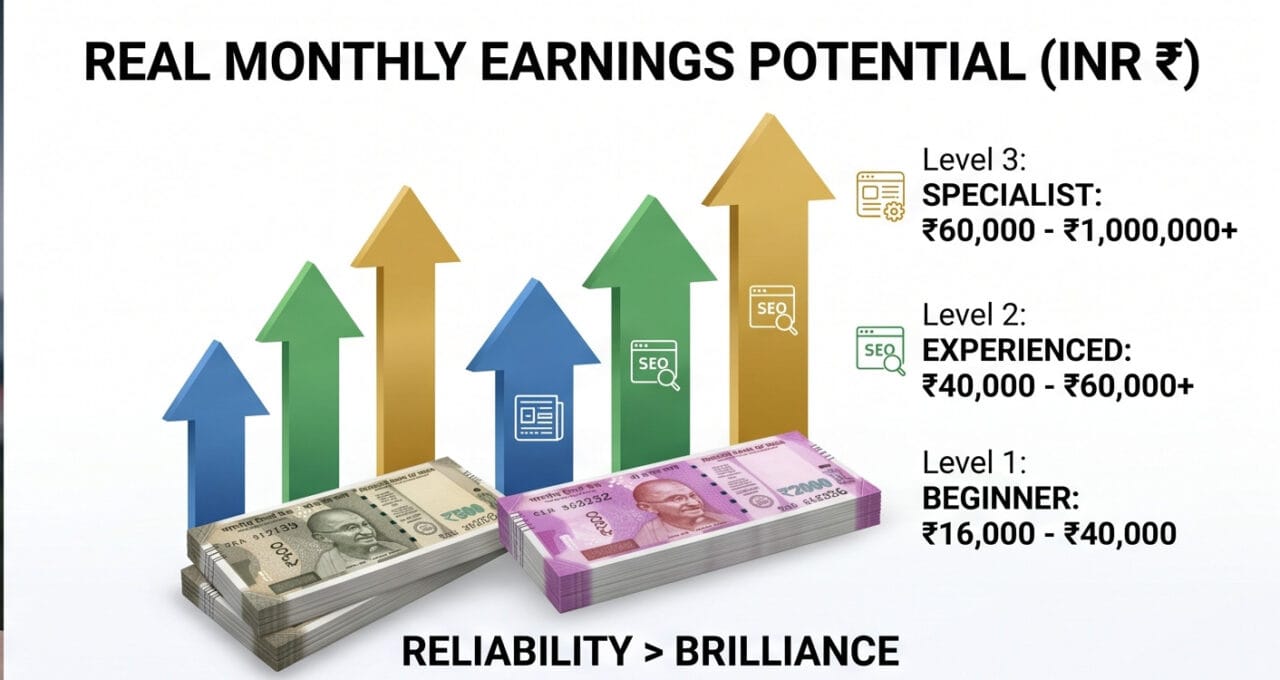
What Does Freelance Content Writing Pay in India
This is the question everyone wants answered first, so here are real numbers.
Beginner writers with no portfolio typically start at ₹0.50 to ₹1 per word. That sounds low, and it is — but it is where most people begin while building samples and getting their first reviews.
Writers with three to six months of experience and a few published samples can charge ₹1 to ₹2 per word. A 1000-word article at this rate pays ₹1,000 to ₹2,000. With four to five such articles a week, you are looking at ₹16,000 to ₹40,000 per month.
Experienced writers who specialise — in SaaS content, finance writing, health writing, or technical topics — regularly charge ₹3 to ₹8 per word. Some charge more. A single 1500-word article at ₹5 per word is ₹7,500. With eight such articles a month, that is ₹60,000. This is not unusual for writers who have been at it for two or three years.
The writers who earn the most are not necessarily the best writers in a literary sense. They are the ones who understand what clients actually need, deliver consistently, and communicate professionally. Keep that in mind.
Where to Find Freelance Content Writing Jobs in India
There are several places to look and each one works differently. Here is what to actually expect from each.
HunarBox is built specifically for Indian freelancers. You create a profile, list your writing services with clear pricing, and clients come to you directly. The advantage here is that you are not competing with writers from 50 other countries — you are on a platform designed for the Indian market. Create a specific service listing like “I will write SEO blog posts for your brand” rather than a vague profile that says you are a content writer. Specific listings get hired.
Internshala has a large number of freelance and part-time content writing opportunities, many of which are beginner-friendly. A lot of startups post here looking for writers who can start immediately. The pay is on the lower side but it is a solid place to build your first portfolio and get real client experience.
LinkedIn is underused by most Indian content writers. A well-written LinkedIn profile with writing samples, a clear headline like “Freelance SEO Content Writer — Blogs, Website Copy, Email” and regular posting about your niche will bring inbound enquiries over time. It takes a few months but the quality of clients from LinkedIn tends to be higher than job boards.
Upwork and Freelancer are international platforms with a lot of competition. As a beginner it is hard to stand out here. The strategy that works is to start with very competitive pricing, get five to ten reviews, and then raise your rates. It requires patience but the earning potential once established is high.
Cold emailing is something almost no beginner tries but it works very well. Find ten to fifteen businesses in your city or niche that have a blog but have not posted anything in months. Email them directly with one or two writing samples and a specific offer — “I can write two blog posts per week for your website starting at ₹X per post.” Most will not reply. Some will. The ones who do often become long-term clients.
Content agencies like Pepper Content, Scatter, and WriterAccess hire freelance writers regularly. The pay is standardised — you do not negotiate — but the work is steady and the briefs are clear. Good for building volume and experience early on.

How to Get Hired When You Have No Experience
This is the real challenge. Every job posting says they want experience but you cannot get experience without being hired first. Here is how to break through that.
Create samples yourself. Do not wait for a client to give you a brief. Pick three topics you know something about and write 800 to 1000-word articles on each. Publish them on Medium, LinkedIn, or a free WordPress blog. Now you have a portfolio. It does not matter that no one paid you for them — they show a client what your writing looks like.
Write for free once or twice strategically. Find a small business, a local startup, or a nonprofit whose work you genuinely care about and offer to write two blog posts for free in exchange for a testimonial and credit. Do not do this more than twice. The goal is to get your first client review and a published sample with your name on it.
Apply to content mills initially. Sites like iWriter or Textbroker pay very little but they accept complete beginners and help you build writing speed and discipline. Spend two to three months here maximum, build your samples, then move on.
Be specific in your applications. When you message a potential client, do not say “I am a passionate writer looking for opportunities.” Instead say “I noticed your company blog has not been updated in three months. I write SEO content for SaaS brands and I would like to pitch you three article ideas this week.” One specific, confident message will always outperform ten generic ones.
For Businesses: How to Hire a Freelance Content Writing jobs
If you are on the other side of this — a brand or startup looking to hire — here is what actually works.
Write a specific brief. Tell the writer who your audience is, what tone you want, which keywords to include, how long the piece should be, and what action you want the reader to take. A good brief produces good content. A vague brief produces vague content.
Ask for one paid test article before committing to a long-term arrangement. Pay fairly for it — even ₹500 to ₹1,000 for a short piece. It tells you a lot about how the writer works, how they handle feedback, and whether their writing style fits your brand.
Do not hire purely on price. A writer charging ₹0.50 per word will give you ₹0.50 per word quality. Content that ranks on Google and converts readers into customers is worth paying for.

FAQ (Freelance content writing jobs)
Can I do freelance content writing without a degree?
Yes, completely. Most clients care about your portfolio and writing quality, not your educational background. A strong set of writing samples will get you further than any degree.
How long does it take to make a full-time income from content writing?
For most people who are consistent and strategic about it, six to twelve months to reach ₹30,000 to ₹50,000 per month is realistic. Some get there faster. It depends on how aggressively you build your portfolio and client base.
Is content writing affected by AI tools?
AI tools have changed the industry but not replaced human writers. Clients are increasingly asking specifically for human-written content because AI-generated writing is easy to spot and does not perform as well in search or with real audiences.
How many clients do I need to earn well?
Three to five long-term clients who give you regular work is more sustainable and less stressful than constantly chasing new projects. Focus on building relationships, not just landing jobs.
Where do I find my first client?
HunarBox, Internshala, and LinkedIn are the three best starting points for Indian writers. Create a complete profile on all three before you start applying anywhere.
More Freelance Guides for 2026:
🔗 Freelance Clothing Designer in India: The Best Hiring Guide
🔗 10 Best Websites Similar to Fiverr in India (2026 Edition)